Qigong
Core elements of Qigong
1. Movement – slow, flowing, or still postures that are easy on the joints
2. Breathing – deep, relaxed, often coordinated with movement
3. Mindfulness / intention – gentle mental focus that guides the practice
Origins
- Developed in China over 2,000 years ago
- Rooted in Traditional Chinese Medicine (TCM), Daoism, Buddhism, and martial arts
- Traditionally used for health maintenance, healing, and spiritual cultivation.
Types of Qigong
- Medical Qigong – for healing and disease prevention
- Health Qigong – for general wellness and longevity
- Martial Qigong – to build strength and internal power
- Spiritual Qigong – for meditation and self-cultivation
How qigong differs from similar practices
- Qigong vs Tai Chi: Tai chi is a martial art with long forms; qigong usually has simpler, repetitive movements and is easier for beginners.
- Qigong vs Yoga: Yoga often emphasizes stretching and holding poses; qigong emphasizes relaxation, flow, and energy awareness.
Who is it for?
- People of all ages and fitness levels
- Especially helpful for those seeking stress relief, gentle exercise, or mindfulness
- Can be done standing, seated, or lying down
- Cultivate calmness and vitality
Why people practice qigong
Qigong supports physical, mental, and emotional health, especially when practiced consistently is effective:
- To reduce stress
- Improve balance, flexibility, and breathing
- Support physical and emotional health
 Physical Benefits
- Improves balance and flexibility – slow, controlled movements strengthen stabilizing muscles
- Enhances circulation – promotes better blood and lymph flow
- Supports joint and muscle health – low-impact and suitable for all ages
- Boosts immune function – associated with reduced inflammation and improved resilience
- Aids pain management – helpful for chronic pain, arthritis, and back discomfort
- Supports cardiovascular health – can lower blood pressure and improve heart rate variability
Mental & Emotional Benefits
- Reduces stress and anxiety – activates the parasympathetic (calming) nervous system
- Improves focus and mental clarity – combines movement with mindfulness
- Enhances mood – linked to reductions in depression and emotional tension
Promotes better sleep – calming effects help regulate sleep patterns
 Breath & Energy (Qi) Benefits
- Improves breathing efficiency – deep, diaphragmatic breathing strengthens lung function
- Cultivates “qi” (vital energy) – in traditional Chinese medicine, qigong helps balance and circulate energy
- Increases vitality – practitioners often report feeling more energized yet relaxed
Accessible & Preventive
- Safe for most people – adaptable for seniors, beginners, and those with limited mobility
- Supports healthy aging – improves mobility, coordination, and overall quality of life
- Complements other treatments – often used alongside yoga, tai chi, meditation, or medical care
Practice Tips
- Even 10–20 minutes a day can be beneficial
- Consistency matters more than intensity
- Can be practiced standing, seated, or even lying down
Core Aspects of Qigong
Qigong offers powerful nervous-system regulation and whole-body health through slow movement, breath, and intention—making it accessible to almost everyone.
My experience of Qigong
I believe that in modern life we all need a way to stay connected to our body and our senses and practice regularly to maintain general wellbeing. Any body-based practice e.g. yoga, Pilates or physical exercise is also a fundamental element of recovery from trauma as it helps to develop the capacity to feel safe in the body and access emotions without feeling overwhelmed or flooded with intrusive thoughts and memories.
I have started practicing Qigong every day since May 2025 and I was amazed at how it helped my body to feel more grounded, connected to myself, my body, my soul and the life energy around us. This is why I decided to train so that many people can benefit from gentle body movement, deep breathing, mindfulness and ancient spiritual practices all in one!
Qigong Training
Qi gong gentle movements and flows reflect the wisdom of nature and the interconnectedness between body mind heart and spirit.
I am a qualified Qigong instructor. I completed my Qigong training in April 2026 and incorporate this into my work, in therapy sessions, in my community-based projects and training with professionals, face to face or online, but preferably in nature!
It can also be incorporated as wellbeing session at conferences or teams days.
For enquiries about Qigong and how it can support you personally and professionally please get in touch and I will be delighted to explore with you.
QiGong for Professionals and for Organisations
Working in any context whether it’s private or public services, charity, research or academia is becoming more stressful and unsustainable and may lead to burnout.
This is a new word for something very familiar to us all eg when the weekend or a holiday is not enough to recharge and feel refreshed, when tiredness becomes exhaustion, when stress becomes chronic and starts showing in bodily symptoms eg aches, lack of sleep or energy, depression and mood swings.
We all know that the current ways of living and working are unsustainable but it it’s hard to change as extreme individualism is telling us we are failing as individuals. We are told we need self-care rather than acknowledging the wider social, political an economic contexts so invested in productivity materialism blaming individuals for their own deficits and failures to cope with the many pressures.
As a therapist one way of sustaining my work is to help myself stay connected to my body through practicing QiGong daily.
I can also offer it as a one off session at conferences or part of a team day in nature for organisations committed to supporting their staff's wellbeing and team spirit.
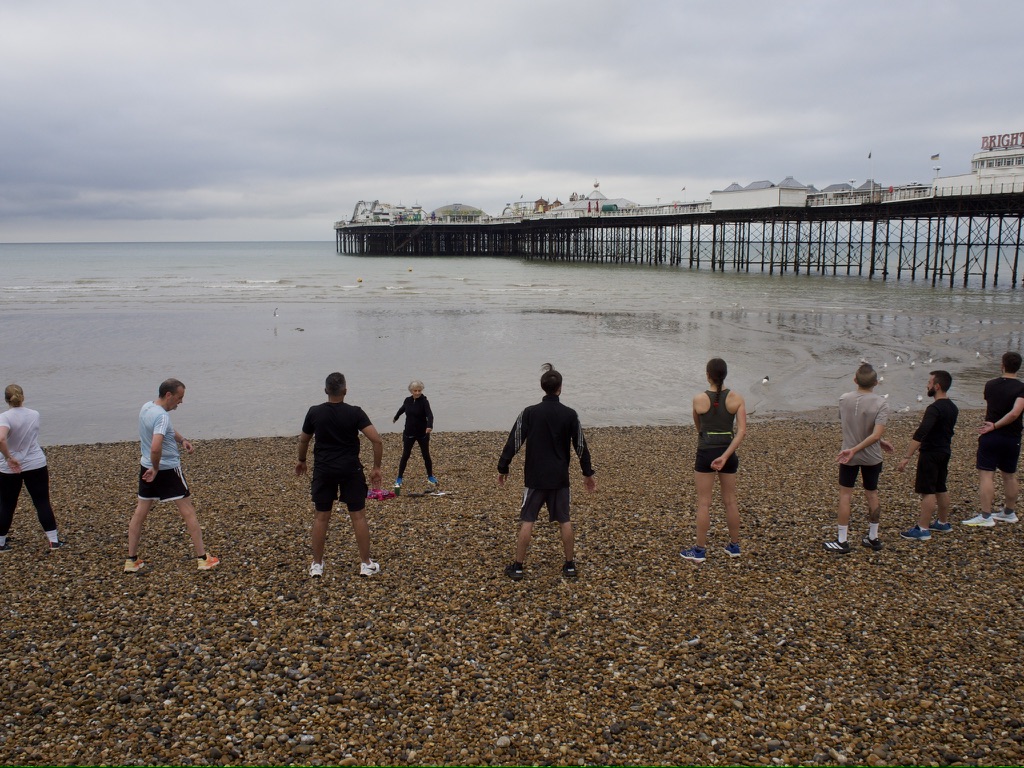
I was delighted that I was asked to provide a taster session @Tissue and cell Engineering Society conference organised by university of Brighton in June 2026.
No better place to do this on the beach in Brighton connecting with the seascape, the seagulls, the sounds of the gentle waves the soft colours of the sea at a low tide at 7am.